
Your rules · Your memory · Your map
One memory for every AI.
It speaks up at the right moment. And only you decide what becomes a rule.
Scroll — morning begins
For people who work with an AI agent in the terminal every day, and are tired of explaining themselves.
It is all there. But as a task grows, the context fills with code and errors, and what you taught it is no longer in view.
Save a correction, and the next time its wake word shows up — in an error, a command, a question — the note speaks before the next move.
memai asks every AI that connects to write down lasting facts, corrections and agreements, as they happen. Plain files, on your own machine.
Sign it, and it is a rule.
The intelligence changes. The memory doesn’t.
A correction made in one project holds in all of them. What belongs to one project stays in its own room.
A rule you signed in one repo is there from the first prompt in the next.
A note can belong to one codebase. It wakes when your AI starts working in that folder, even when it reaches in from another project.
The fix you found in one codebase is one question away in all of them.
A room is nothing more than a folder name written in the note.
Other memories wait to be asked. memai listens to the work itself: the command that failed, the error code, the folder you just opened.
The first time a signal shows up, your AI gets the note’s name and a single line.
A signal that repeats is one that matters. Now the full text arrives.
Once it has been said in full, it goes quiet. If the signal is still around a quarter of an hour later, you get the one line again.
It makes the model you already have more accurate. Same model, same question: with the right note in front of it, it follows what you decided. Without it, it does the obvious thing instead.
A note that wakes says what it is: who wrote it, how old it is, and whether you have signed it. An unsigned note is information, not an order, and your AI is told to ask you when it is unsure. The whisper needs a hook into the client, and today two terminal agents have one. Everywhere else the memory answers when it is asked.
Through memai, your AI cannot make a rule, change one or delete one. Nothing an AI writes becomes a rule until you sign it.
If a signed rule is changed behind your back, it stops being a rule — and memai says so.
Measured, derived or assumed.
One of the three words sits on every note, so you can tell what was checked from what was only believed.
memai doesn't arrive empty. It ships with ten working rules, each one learned in daily work across several large codebases at once, between one person and their AI. All ten:
Ask “could we…?” and you get an answer — not a rewrite.
So a guess never arrives dressed as a fact.
Reproduce it somewhere else, fix it there, ship once.
“You said X in March — still true?” Never “you’re contradicting yourself.”
Every rule is a file. Change it or delete it — they are yours from the first second. They start out labelled assumed: proven in one working relationship, not yet in yours.
The model is a tenant.
You own the house.
Your rules, your notes and your map are plain files on your own disk — put them in git if you like. Change the model or the provider, and the next one moves into the same home: same rules, same name, same work in progress.
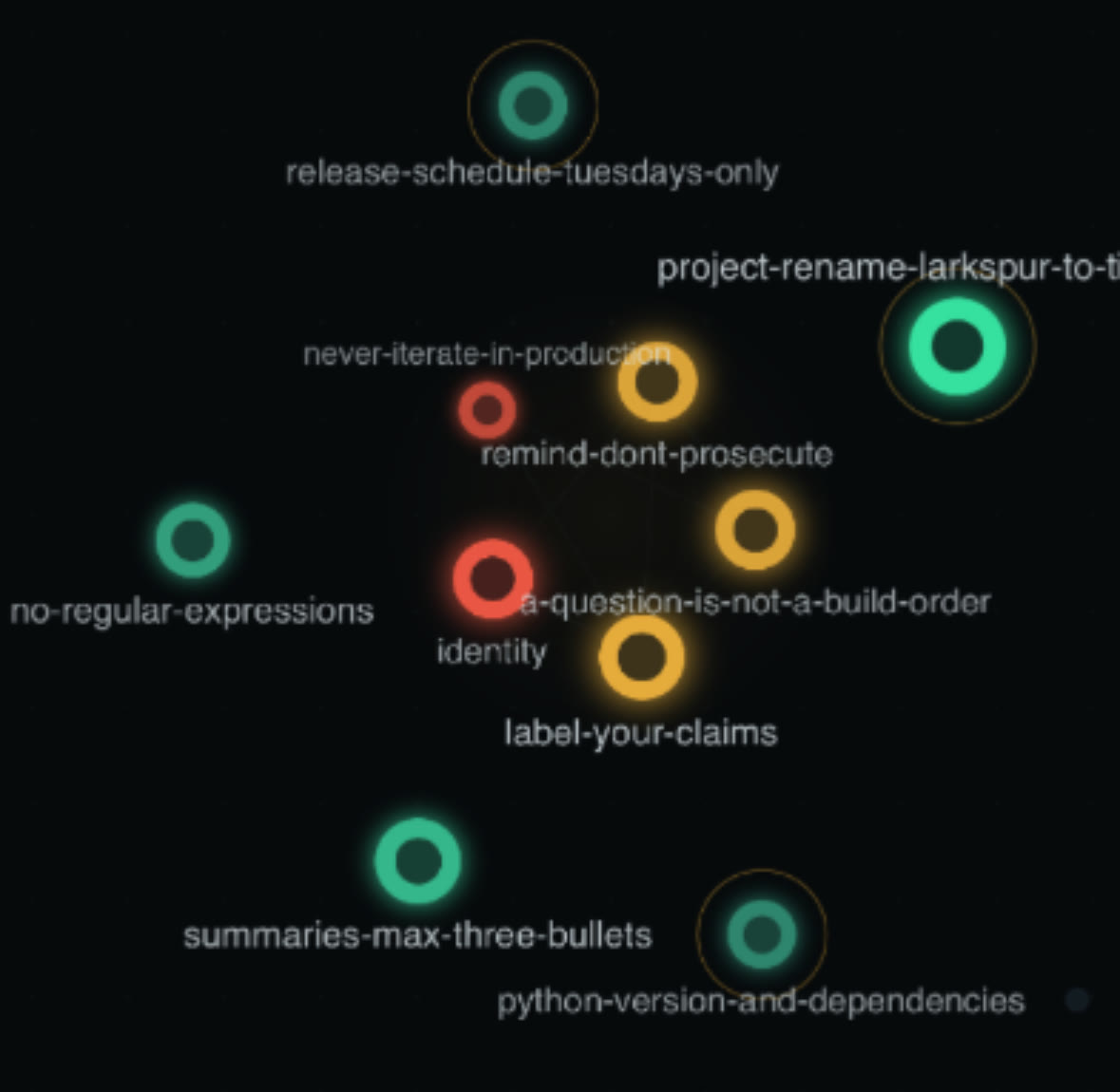
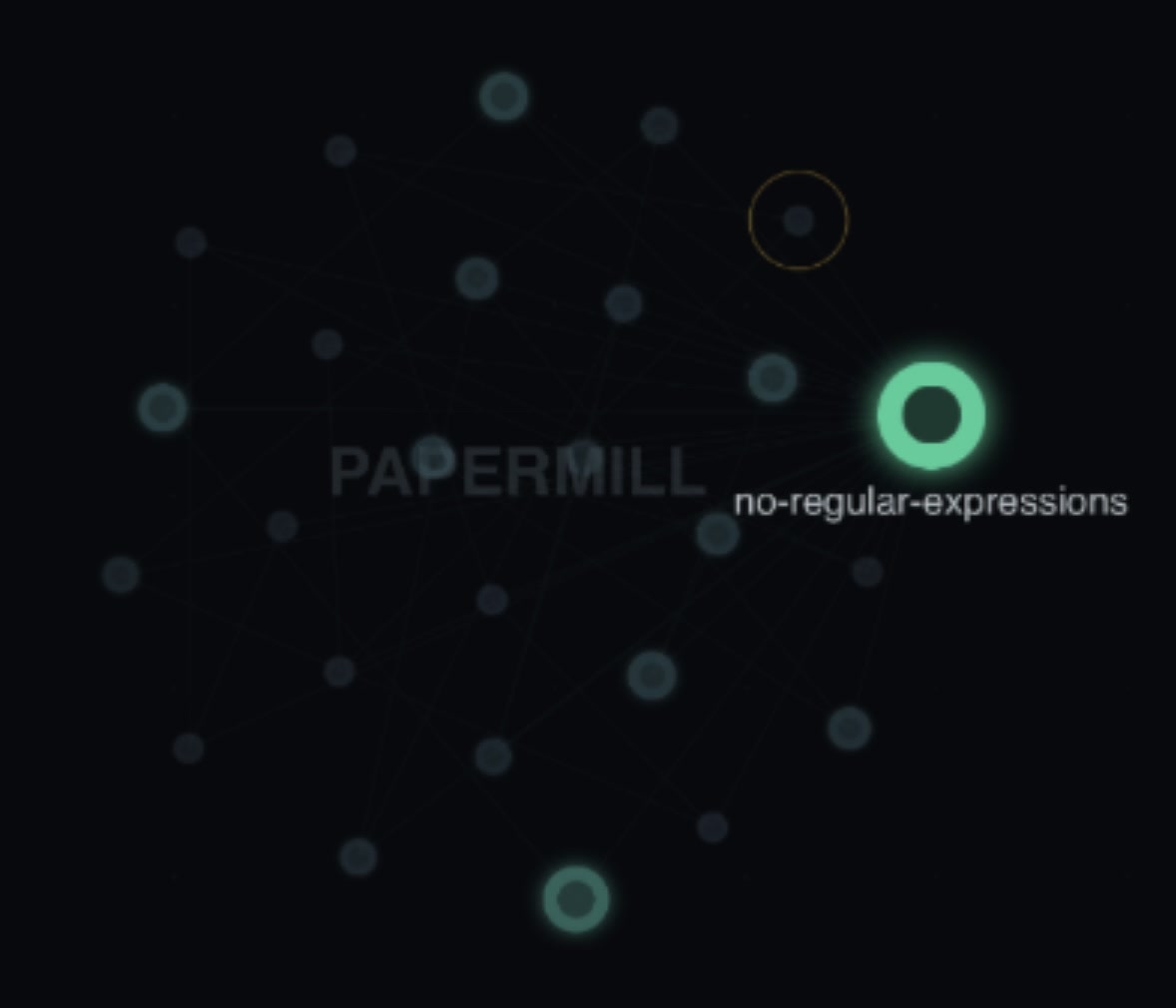
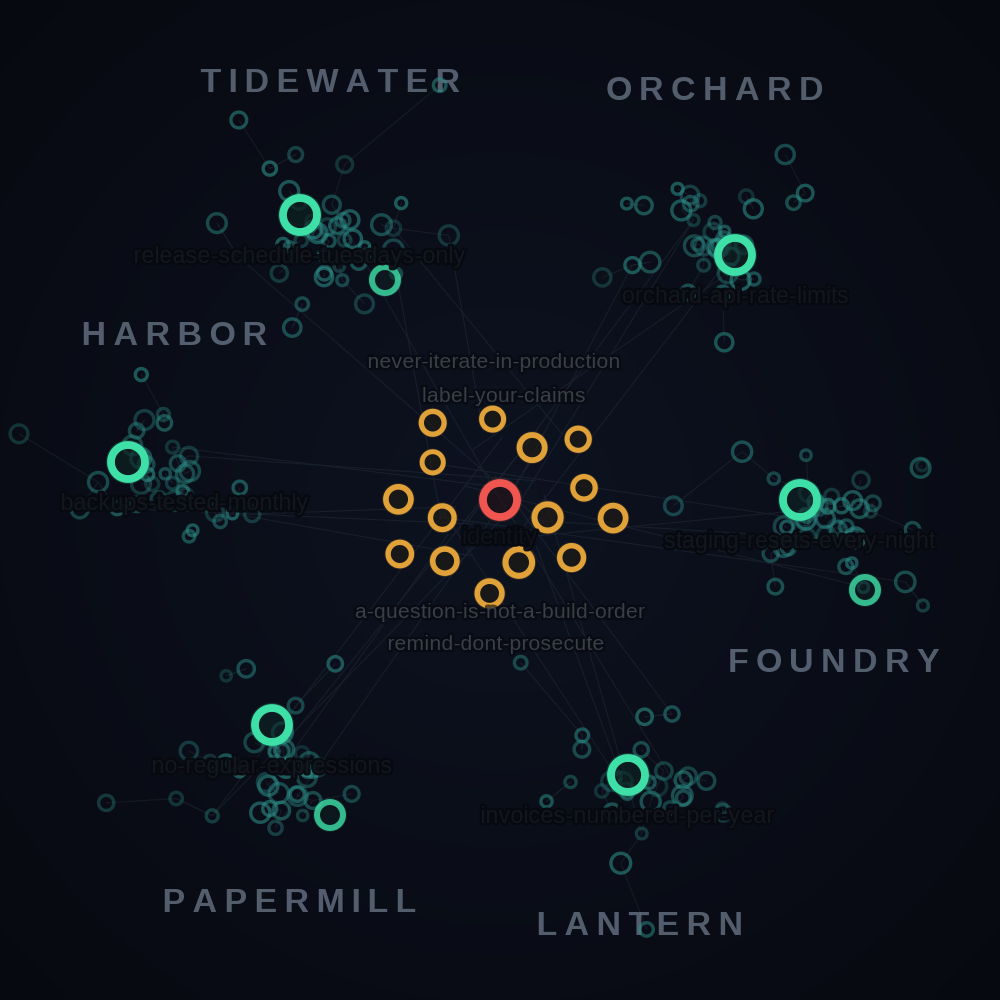
Watch your memory think — in real time, on any screen you own. A context window can’t be opened. Your memory can.
The memory, the rules, the stamp and the map all run on your own machine, and that part costs nothing. Not a trial.
Want it in git? Go ahead — it’s your files.
memai works with AI agents that run in your terminal. Chat apps on the web or on your phone can’t connect to it.
Sync — the same memory on every machine you own, and the map on your phone, where you sign rules with Face ID or your fingerprint. Encrypted before it leaves your disk. Early access is trying it now.
Team — shared rooms, and a stamp for each person. Coming later.
No prices yet. With sync, an encrypted copy of your memory is stored on our servers. We can’t open it: the key stays on your devices.

Tomorrow is a new session.
Same rules. Same notes. Whatever repo or model you open.
This is what a memory looks like. Your visit is already in it.
Touch any light. Each one is a note.